
How much emergency fund do you need?

An emergency fund is money set aside for the things you cannot plan for: a sudden repair, a period without income or a bill that arrives at the worst possible moment. Almost everyone agrees it is a good idea, and almost nobody agrees on how large it should be, because the honest answer depends on your own life rather than a single figure. This article explains how to work out the right size for you and where to keep it so it is available the day you need it.
What the fund is for
The purpose of an emergency fund is to stop an unexpected expense turning into debt. When a boiler fails or a job ends, money that is already set aside lets you deal with it without borrowing at a bad rate.
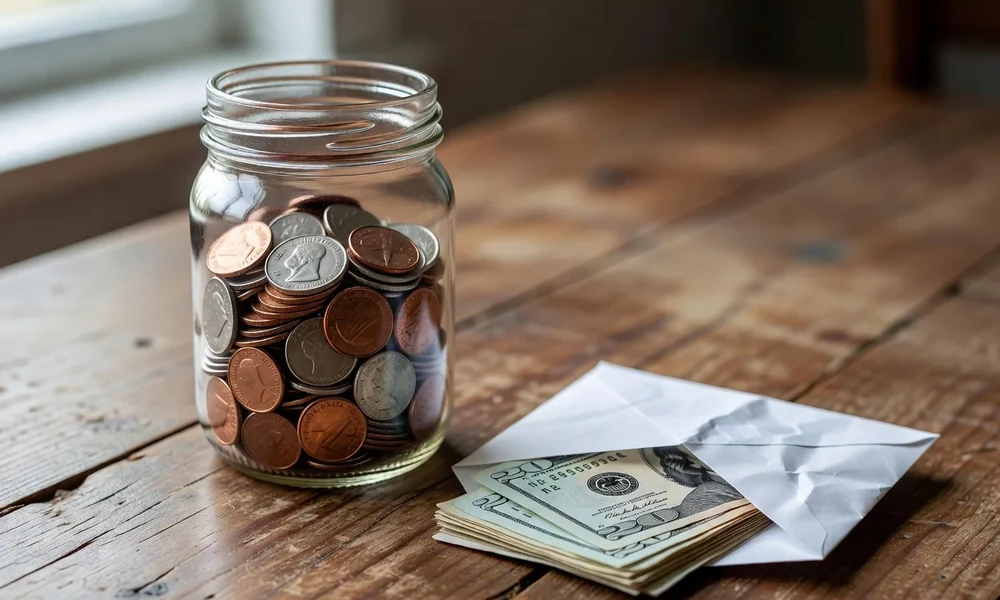
It is not an investment and it is not savings for a goal. A holiday fund and an emergency fund do different jobs, and keeping them separate stops one quietly consuming the other.
The fund also buys time. Money available immediately lets you make a calm decision rather than a rushed one, and the value of that calm is easy to underestimate.
Start from your essential spending
The right way to size a fund is to begin with your essential monthly spending: housing, food, utilities, transport, insurance and any minimum debt payments. These are the costs that continue whether or not you have income.
Optional spending matters far less, because in a genuine emergency it can be reduced. Size the fund on the minimum you need to keep life running, not on your usual comfortable month.
Write the figure down once and keep it. Knowing your own essential monthly number is useful for far more than this one calculation.
Choosing a number of months
A common starting point is three to six months of essential spending, and that range exists for good reason. It covers most ordinary disruptions without demanding an unrealistic amount of saving.
Adjust it to your circumstances. A stable job, a second income and good insurance support the lower end, while a single income, self employment or an uncertain sector argue for the higher end.
Add room for the large one-off risks you actually face, such as a car, an old boiler or a property with known maintenance needs. A specific risk deserves a specific allowance.
| Situation | Lower end | Higher end |
|---|---|---|
| Stable job, two incomes | Three months | Four months |
| Single income | Four months | Six months |
| Self employed | Six months | Twelve months |
| Older home or car | Add for repairs | Add for repairs |
| Dependants | Higher | Higher |
| Good insurance cover | Lower | Moderate |
Building it up steadily
Begin where you are rather than at the target. Even a small first fund changes how an unexpected bill feels, and a modest amount set aside is far better than a perfect plan that never starts.
Make the saving automatic. A standing transfer on payday treats the fund like any other bill and removes the need to decide each month.
Use windfalls to accelerate. A bonus, a tax refund or a gift is the easiest money to add to the fund, because it never formed part of your normal spending.
Where to keep it
Keep the emergency fund somewhere safe and accessible: a savings account is the usual answer, because it can be reached quickly without penalties and it does not fall in value.
Keep it separate from your everyday account. A little distance makes it harder to spend on ordinary things, while still leaving it available in a real emergency.
Do not put it in investments or anything locked away. The point of the fund is availability, and an asset that can fall in value or take days to sell is not the right home for it.
Review and rebuild
Review the fund when your life changes. A new job, a move, a child or a change in income all alter the right size, and the number that suited you last year may no longer fit.
Rebuild it after you use it. A fund that is spent and not replaced has stopped doing its job, so the first saving after an emergency goes straight back into the fund.
Finally, accept that the number is a guideline, not a rule. The right emergency fund is the one that lets you sleep at night, and for many people that matters more than any formula.
- Base the fund on essential monthly spending, not total spending.
- Aim for three to six months as a starting range.
- Adjust upward for single income or self employment.
- Automate a transfer on payday so the fund grows on its own.
- Keep it in an accessible account, separate from everyday money.
- Rebuild it immediately after you have had to use it.
One useful habit is to name the account. A savings account labelled as the emergency fund is treated differently from a general one, and the small act of naming it makes dipping into it feel like breaking a rule rather than spending money.
It also helps to decide in advance what counts as an emergency. A boiler failure clearly does; a sale on a holiday does not. Agreeing the rule while you are calm is far easier than arguing with yourself in the moment.
The right emergency fund is not a fixed number but a personal one, worked out from your own essential spending and the risks you actually face. Start small, keep it accessible and separate, and review it when life changes, and the fund will do its job quietly for years.
Read next
Quartz crystals vs. ceramic resonators
Two tiny timing components, two different jobs. What the difference means for everyday electronics.
Fixed deposits and savings accounts explained
How the two most common ways to save differ, and how to choose between them.
What does a home inspection cover?
What a standard inspection checks, what it deliberately leaves out, and how to use the report.