
Quartz crystals vs. ceramic resonators
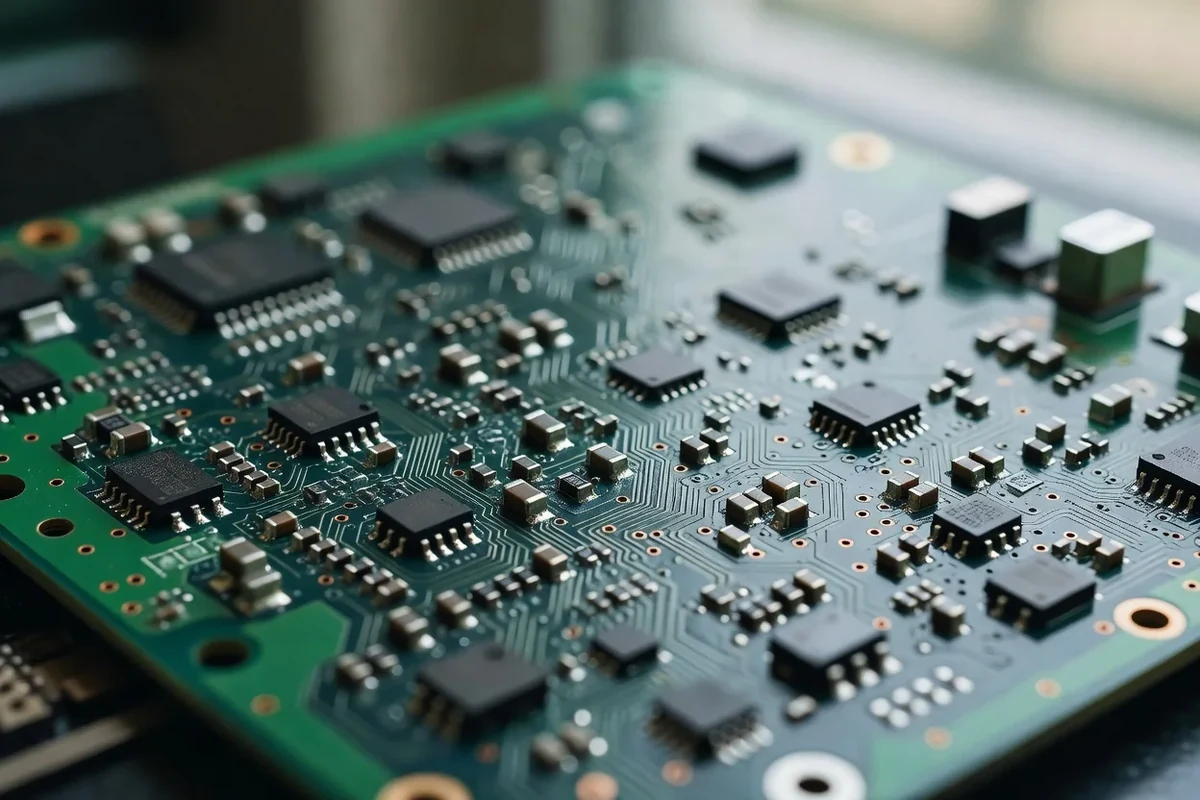
Almost every device with a clock inside it needs something to keep time, and that something is usually either a quartz crystal or a ceramic resonator. The two components look similar, cost similar amounts and are often mistaken for one another, yet they are chosen for quite different reasons. This article explains what each one does, how they differ in accuracy and cost, and why an engineer will reach for one or the other when designing an ordinary piece of electronics.
What these components actually do
Both parts are oscillators: they vibrate at a steady rate when driven by a circuit, and that vibration becomes the heartbeat of a digital system. A microcontroller, a radio or a watch uses it to count time accurately.
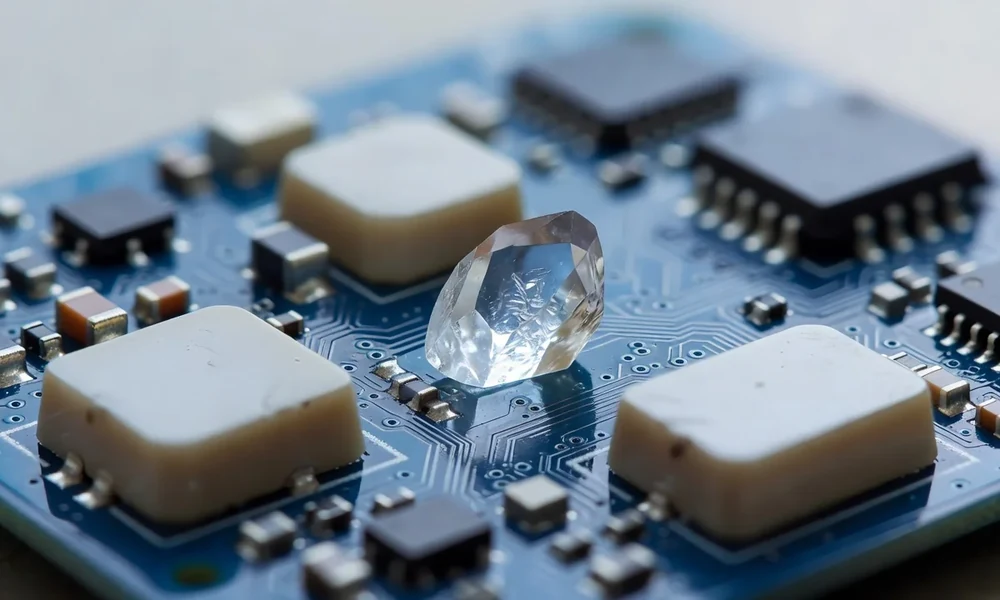
A quartz crystal is a thin piece of quartz, a material with a natural and remarkably stable resonance. It is the standard choice when timekeeping or frequency precision matters, which is why quartz clocks, computers and radios all rely on it.
A ceramic resonator does the same job using a piece of piezoelectric ceramic instead of quartz. It is cheaper and simpler, but it vibrates less precisely, and that trade off is the whole story of the two parts.
Accuracy and stability
Quartz is the more accurate of the two. A good crystal holds its frequency closely across temperature changes, which is why it is used wherever a device must keep reliable time or stay on the right radio frequency.
A ceramic resonator drifts more with temperature and generally offers looser accuracy. For a great many jobs that is perfectly acceptable, and paying for more precision would simply be wasted money.
The difference is usually small in absolute terms. It matters most where a system must communicate over a radio link or keep time over long periods, and matters least in a device that merely needs a rough internal rhythm.
Cost, size and simplicity
Ceramic resonators are typically cheaper and can be smaller and more robust, which makes them attractive in high volume consumer products where every fraction of a cost matters.
Crystals cost more and often need slightly more careful circuit design, including the right load capacitors, to work at their best. That extra effort is repaid wherever precision is genuinely required.
Both come in small surface mount packages, so size alone rarely decides the question. The deciding factors are accuracy, price and how much design effort the product can justify.
| Property | Quartz crystal | Ceramic resonator |
|---|---|---|
| Material | Quartz | Piezoelectric ceramic |
| Accuracy | High | Moderate |
| Temperature stability | Good | Weaker |
| Cost | Higher | Lower |
| Circuit effort | More careful design | Simpler |
| Typical use | Clocks, radio, computers | Appliances, toys, remotes |
Where each one is used
Quartz crystals appear in clocks and watches, computers, accurate radio equipment, measuring instruments and anything that must keep time or frequency over months and years.
Ceramic resonators appear in everyday appliances, toys, remote controls, simple sensors and many low cost embedded devices, where a rough and stable rhythm is all that is needed.
When you open a consumer gadget, the presence of one or the other tells you something about the design priorities. A resonator suggests value engineering; a crystal suggests that accuracy was worth paying for.
How to choose between them
Ask what the system needs. If it must keep accurate time, lock onto a radio channel or measure something precisely, choose a crystal and design the circuit properly around it.
If the timing only has to be consistent enough for the device to work, a ceramic resonator will usually do the job at lower cost and with less fuss. Matching the part to the job is good engineering.
Check the datasheet rather than the price tag. Tolerance, temperature behaviour and load requirements differ between individual parts as much as between the two technologies.
The practical takeaway
For most people the distinction is invisible, and that is exactly as it should be. The component is chosen by the designer, buried on the board and never mentioned again once the product works.
Knowing the difference is useful anyway. It explains why some cheap devices lose time and why accurate ones cost a little more, and it turns an obscure detail into a simple story about matching cost to precision.
- Quartz gives the better accuracy, ceramics the lower price.
- Crystals suit timekeeping and radio; resonators suit simple control.
- Both need a properly designed oscillator circuit around them.
- Size rarely decides the choice; accuracy and cost do.
- Read the datasheet, not just the price, when comparing parts.
- Match the component to the job rather than to habit.
It helps to think of the two parts as two levels of care rather than as rivals. One is built for precision, the other for economy, and a good design uses the cheaper part everywhere the job allows and saves the accurate one for the places that genuinely need it.
That habit of matching the component to the requirement runs through all of electronics. The most reliable products are rarely the ones with the most expensive parts; they are the ones whose parts were chosen deliberately for what each circuit actually has to do.
Quartz crystals and ceramic resonators both keep time, and either can be the right answer. Choose quartz when accuracy matters, a ceramic resonator when it does not, and the tiny part at the heart of your circuit will do exactly what the design asked of it.
Read next
Fixed deposits and savings accounts explained
How the two most common ways to save differ, and how to choose between them.
What does a home inspection cover?
What a standard inspection checks, what it deliberately leaves out, and how to use the report.
How much emergency fund do you need?
How to work out the size of an emergency fund for your own situation, and where to keep it.