First aid basics every household should know
Every household has small accidents: a cut while cooking, a burn from a hot pan, a scrape on a walk or a sudden allergic reaction. Knowing a few first aid basics means you can act calmly and correctly in the first minutes, which is often when it matters most. This article covers the knowledge worth having at home, the contents of a sensible kit and, just as importantly, when to stop and call for professional help.
When to call for help first
Some situations need professional help before anything else. If someone is unresponsive, has difficulty breathing, is bleeding heavily, has a serious head injury or shows signs of a severe allergic reaction, call the emergency services immediately.

Do not delay a call to try a home remedy. The most important skill in first aid is recognising the situations that are beyond simple treatment, and acting quickly on that recognition.
While you wait, follow the instructions you are given on the phone. Emergency operators can guide you through what to do, and following their advice is more reliable than improvising from memory.
Small cuts and grazes
For a minor cut, wash your hands and then clean the wound gently under running water. Removing dirt early is what prevents most of the infections that follow a small injury.
Apply firm, steady pressure with a clean cloth or dressing to stop the bleeding, and keep the pressure on rather than checking every few seconds.
Once the bleeding has stopped, cover the wound with a clean dressing and keep it dry. Watch for signs of infection in the following days, such as increasing redness, swelling or pain, and seek medical advice if they appear.
Burns and scalds
For a minor burn or scald, cool the area under cool running water for a good while, which reduces the damage and the pain. Do not use ice, butter or creams, which can make the injury worse.
Remove jewellery and loose clothing from around the area before it swells, but do not pull away anything that has stuck to the skin.
Cover the burn lightly once cooled and do not burst any blisters. Burns that are large, deep, on the face, hands or joints, or that affect a child, need medical attention rather than home treatment.
| Situation | First step | Get help if |
|---|---|---|
| Minor cut | Clean and press firmly | Bleeding will not stop |
| Burn or scald | Cool under running water | Large, deep or on a joint |
| Choking | Encourage coughing | They cannot breathe or speak |
| Fainting | Lay down, raise legs | No quick recovery |
| Severe reaction | Call for help at once | Always |
| Any doubt | Call and ask | You are unsure |
Choking, fainting and shock
If someone is choking and can still cough, encourage them to keep coughing. If they cannot breathe, cough or speak, act immediately and call for emergency help, following standard choking guidance for their age.
For someone who has fainted, lay them down and raise their legs slightly, and make sure their airway is clear. Most simple faints pass quickly, but a faint with injury or without recovery needs medical assessment.
Shock can follow a serious injury or a severe reaction. Keep the person warm, still and reassured, and get professional help, because shock is a condition for the emergency services rather than the first aid kit.
A sensible household kit
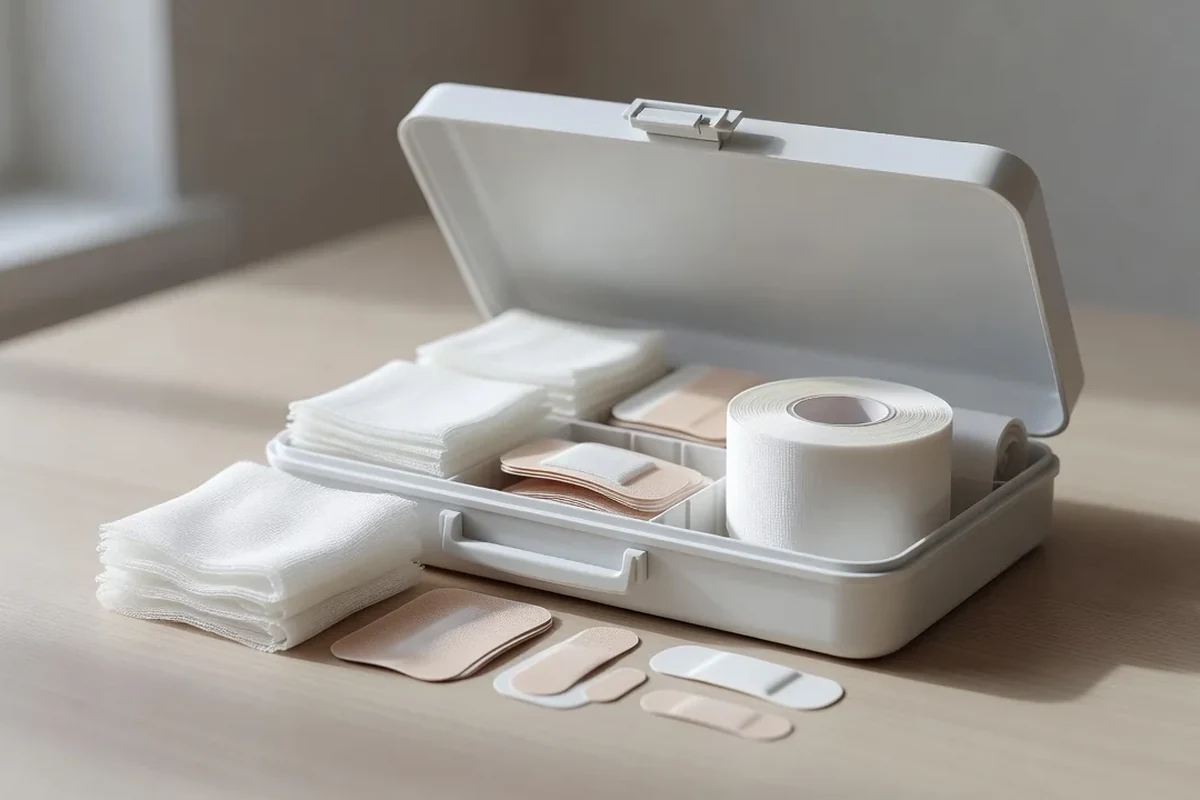
A basic kit is short and cheap: assorted plasters, sterile dressings, a roll of bandage, tape, scissors, disposable gloves, a thermometer and a digital or printed first aid guide.
Add any personal medication the household relies on, along with a note of allergies and emergency contacts. Keep the kit in one known place and tell everyone in the house where it is.
Check the kit every few months and replace what you have used or that has expired. A first aid kit is only useful if it is complete at the moment you need it.
Learning and staying ready
Consider a basic first aid course. Hands on practice with a qualified instructor teaches far more than reading, and it gives you the confidence to act when a real situation arrives.
Keep the emergency number visible in the home, especially where children or visitors might need it, and make sure everyone old enough knows how to call for help.
Finally, remember that first aid is about doing the simple, correct things and getting expert help, not about being a hero. Calm, basic actions in the first minutes do more good than complicated ones.
- Call emergency services first for severe symptoms.
- Clean small wounds under running water.
- Press firmly and steadily to stop bleeding.
- Cool burns with water, never ice or butter.
- Keep a complete first aid kit in one known place.
- Take a basic first aid course for real confidence.
It also helps to tell someone where the kit is and how to use the basics. In an emergency the person who acts is often not the one who packed the box, and a household where everyone knows the essentials responds far better than one where only a single person does.
This article is general information rather than medical advice. First aid guidance differs slightly between countries and changes over time, so follow the current official guidance where you live and take a proper course for anything beyond the basics.
First aid is less about expertise than about a few correct actions done calmly in the first minutes. Learn the basics, keep a complete kit, and know when to call for help, and your household will be ready for the small accidents that happen in every home.
Read next
How to read a contract before you sign
A simple routine for checking the parts of a contract that most often catch people out.
A simple way to build a weekly meal plan
A repeatable method for planning a week of meals that cuts waste and last-minute decisions.
How to protect your accounts and passwords
Everyday account security: strong passwords, two-step checks and how to spot a scam.